Amsterdam Short-Let Math Favors Sloterdijk Trams Over Centrum Canal Attics
Amsterdam's short-let market has long been a magnet for tourists dreaming of canal views and steep staircases. But the price gap between Centrum canal attics and Sloterdijk tram-side studios has widened to the point where the math demands a second look. This breakdown compares costs, transit times, and neighborhood character, using spring 2026 booking data and local transit schedules. The goal is not to declare a winner but to help you decide where your money goes furthest.
The Centrum Tax: Why Canal-View Rentals Cost 40% More Than a Tram Ride Away
A typical short-let in Amsterdam's Centrum—say, a canal-side attic with a single bed and a shared toilet—starts around €150 per night in low season and climbs to €250 or more during tulip season or summer. By contrast, a modern studio in Sloterdijk, a district 15–20 minutes west by tram, rents for roughly €80 to €120 per night. That's a gap of 40 to 50 percent, even before factoring in booking fees.
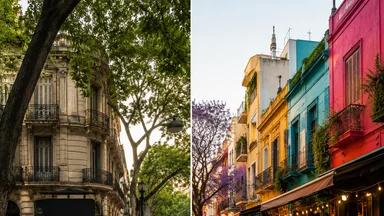
The reasons are partly historical. Centrum properties are older, often with no lift, steep stairs, and noise from canal traffic and nightlife. Many lack double glazing. Sloterdijk apartments, built mostly in the 1990s and 2000s, tend to have lifts, soundproofing, and a supermarket within a five-minute walk. The trade-off is charm: you won't wake up to a view of the Herengracht, but you also won't pay €50 extra for the privilege.
Data from Booking.com and Airbnb aggregated by travel analysts (as of spring 2026) shows the Centrum premium holding steady. The gap is widest in April (tulip season) and narrowest in February, but never closes entirely. For a three-night stay, the difference can easily exceed €200—enough to cover a week of meals if you cook in the studio's kitchen.
It's worth noting that some Centrum listings do offer value: a small studio in the less touristy eastern part of the Centrum, near the botanical gardens, might run €130–150. But those are exceptions, and they book out months in advance. The general rule holds: if you want a central location, you pay a premium that has little to do with the quality of the accommodation.
Consider a concrete example: a couple booking a four-night stay in early July. A canal-view studio in the Jordaan district listed at €220 per night, plus €50 cleaning fee, plus 7% tourist tax, plus a €15 booking fee, totals roughly €1,010. A Sloterdijk studio at €100 per night, with a €40 cleaning fee and the same tax and booking fee proportions, comes to about €490. The difference is €520—enough for a return train from Paris, or a week of museum passes, or a three-course dinner at a top restaurant. That's the kind of math that makes the tram ride worthwhile.
Tram-Line Math: Sloterdijk to City Center in Under 25 Minutes
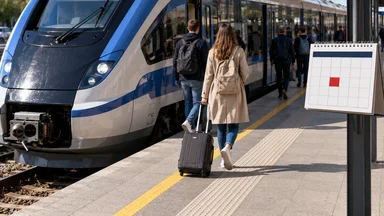
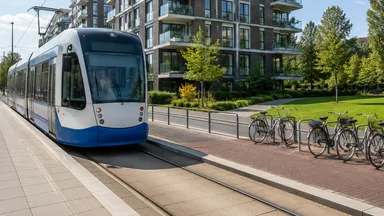
Sloterdijk is not a sleepy suburb. It's a major transit hub with trains, trams, buses, and a metro line. Trams 19 and 7 run every 10 minutes or so from Sloterdijk station to the city center, terminating at Centraal Station in about 15 to 20 minutes. A GVB multi-day pass costs roughly €8 to €10 per day, covering unlimited trams, buses, and metros within the city. For a one-week stay, that's €56–70—far less than the nightly savings from staying outside the Centrum.
After midnight, the night bus N82 runs hourly along a similar route, so you're never stranded. Bike rental from Sloterdijk station costs around €12 per day, and the cycle path to the center is flat and well-marked. Many travelers find the 15-minute ride pleasant, especially in spring and summer.
The savings from a Sloterdijk short-let easily cover transport. If you save €50 per night on lodging and spend €10 on a day pass, you're still €40 ahead. Multiply that by a week: €280 saved, enough for a nice dinner or a museum card. The math is even better if you buy a weekly GVB pass (around €35) or use a bike for most trips.
One caveat: if you're a night owl who wants to stumble home from bars in the Red Light District at 3 a.m., the tram schedule becomes a constraint. Night buses are less frequent, and a taxi from the center to Sloterdijk runs about €20–25. But for most travelers, the tram system is reliable and efficient, and the savings still stack up.
For those who prefer walking, the route from Sloterdijk to Centraal Station is about 5 kilometers—roughly an hour on foot along the water. Not practical for daily commuting, but a pleasant stroll on a sunny afternoon. Some travelers combine a morning tram ride with an evening walk back, enjoying the sunset over the IJ River. It's a small pleasure that adds to the experience.
Hostel vs. Guesthouse vs. Short-Let: The Per-Night Breakdown
Hostels in the Centrum charge €40–60 per night for a dorm bed—cheap, but you share a room with strangers, and lockers are often small. A private room in a hostel near Sloterdijk, such as those around the station, goes for €70–90 per night. That's comparable to a short-let studio, but with shared bathrooms and kitchen facilities.
Guesthouses in neighborhoods like Westerpark or De Baarsjes—both a 10-minute tram ride from Centrum—range from €100 to €130 per night for a private room with a shared bathroom. These often include breakfast, which adds value. A short-let studio in Sloterdijk, at €80–120, typically has its own kitchen, bathroom, and entrance. The kitchen alone can save you €15–25 per day on meals if you cook breakfast and dinner at home.
For a solo traveler or a couple, the short-let wins on privacy and meal flexibility. For backpackers who prioritize socializing, a hostel dorm in the Centrum might be worth the premium. But the gap between a private hostel room and a short-let is narrow: €70–90 vs. €80–120, with the short-let offering more space and a kitchen. Families, especially those with young children, often prefer the short-let for the separate bedroom and ability to prepare simple meals.
Let's look at a specific scenario: a family of four visiting for five nights. A Centrum short-let with two bedrooms might cost €250 per night, totaling €1,250 plus fees. A Sloterdijk short-let with two bedrooms might be €150 per night, totaling €750 plus fees. The €500 difference buys a lot of museum tickets or meals out. Plus, the kitchen allows the family to prepare breakfast and pack lunches, saving another €20–30 per day. That adds up to €600–750 in total savings—enough for a day trip to the Keukenhof gardens or a canal cruise.
For solo travelers, the comparison is even starker. A solo traveler booking a Centrum short-let for four nights might pay €200 per night, total €800 plus fees. A Sloterdijk studio at €90 per night totals €360 plus fees. The €440 saved could cover a return flight from many European cities. That's the kind of math that makes budget travelers reconsider their priorities.
Neighbourhood Trade-Offs: Westerpark, De Baarsjes, and Sloterdijk
Westerpark is the most obvious alternative to Sloterdijk. It's green, full of hip cafés and restaurants, and a 10-minute tram ride from Centraal Station. Short-lets here average €110–150 per night—cheaper than Centrum but more expensive than Sloterdijk. The trade-off is atmosphere: Westerpark has a village feel with a weekly market and plenty of parks. But it's also popular, so availability can be tight during peak season.
De Baarsjes, just south of Westerpark, is quieter and more residential. Prices are similar to Westerpark, but you get more local markets and fewer tourists. The tram connections are good (lines 7 and 19 pass through), and the neighborhood has a handful of excellent Indonesian and Surinamese restaurants. It's a solid middle ground if you want some local flavor without the Centrum price tag.
Sloterdijk itself is less charming. It's a transit-oriented district with office blocks, a shopping mall, and modern apartment buildings. The main draw is the station, which connects to Schiphol Airport in 10 minutes and to the city center in 15. There are a few parks and a large park (Rembrandtpark) within walking distance, but the streets are not lined with canal houses. If you care about neighborhood character, Sloterdijk may feel sterile. If you care about value and convenience, it's hard to beat.
For travelers who want a bit of both, a split stay works: two nights in a Sloterdijk short-let for the first part of the trip, then two nights in a Centrum hostel for the nightlife. That way you save on the bulk of your stay while still enjoying the central location for a couple of days. It's a compromise that many regular Amsterdam visitors recommend.
Another option is the neighborhood of Amsterdam Noord, north of the IJ River, reachable by a free ferry from Centraal Station. Short-lets there average €90–130 per night, similar to Sloterdijk, but with a more industrial-chic vibe and a growing arts scene. The ferry runs 24/7, so late-night access isn't an issue. However, the tram network is less extensive in Noord, so you'll rely more on buses or bikes. It's a viable alternative for travelers who want a hip, offbeat neighborhood without the Centrum prices.
Hidden Fees and Fine Print That Eat Your Budget
The listed price is rarely the final price. Cleaning fees on short-lets add €30–60 per stay, regardless of length. A three-night stay in a €100-per-night studio might cost €330 after cleaning, pushing the effective rate to €110. Centrum apartments sometimes require a cash deposit of €100–200, which ties up money you could spend elsewhere.
Amsterdam imposes a tourist tax of roughly 7% of the room rate, plus a small per-person fee. On a €200-per-night Centrum apartment, that's about €14 extra per night. On an €80 Sloterdijk studio, it's about €5.60. The difference adds up over a week. Booking through Airbnb or similar platforms adds another 10–15% in service fees. Direct bookings with landlords or through local agencies can sometimes bypass these, but they're less common.
Sloterdijk area has a practical advantage: free street parking in many parts. Centrum parking costs €5–7 per hour or €50 per day. If you're driving, the savings from a Sloterdijk short-let can be substantial—enough to cover the entire accommodation cost difference for a week. This is less relevant for travelers arriving by train or plane, but for those on a road trip, it's a major factor.
Another hidden cost: laundry. Sloterdijk apartments often have a washing machine; Centrum canal attics rarely do. A laundromat visit in the Centrum runs €5–10 per load. Small, but it adds up. And if you need to print tickets or maps, Sloterdijk has a business center at the station; Centrum may require a café with printing services. These are minor points, but they illustrate how the budget math extends beyond the nightly rate.
There's also the matter of check-in flexibility. Many Centrum short-lets require a strict check-in window (e.g., 3–6 PM) because the host lives elsewhere and must meet you. Sloterdijk studios, often managed by professional companies, sometimes offer self-check-in via a key code, allowing arrival at any hour. For travelers with late flights or early departures, that flexibility can be worth €20–30 on its own—saving a taxi wait or a rushed meal.
Seasonal Shifts: When Sloterdijk Becomes a No-Brainer
Amsterdam's peak season runs from April (tulip season) through August. During these months, Centrum short-lets can spike 30–50% above low-season rates. Sloterdijk prices rise too, but by a smaller margin—perhaps 20–30%. The gap widens, making Sloterdijk an even better deal. In April 2026, some Centrum canal attics were listed at €250–300 per night, while Sloterdijk studios hovered around €100–130. That's a saving of €120–170 per night.
December, with its holiday markets, also sees a surge in Centrum prices, though not as extreme as spring. February is the cheapest month across the board, with both zones dropping by roughly 20%. In February, a Centrum short-let might dip to €120–150, while Sloterdijk could be as low as €65–90. The percentage gap remains, but the absolute difference narrows.
Sloterdijk's availability stays steadier throughout the year. Because it's less popular with tourists, you're less likely to find everything booked out. During events like King's Day (April 27) or the Amsterdam Marathon (October), Centrum fills up weeks in advance. Sloterdijk often has last-minute availability, which can be a lifesaver for spontaneous travelers.
If you're planning a trip during a major event, booking early is essential regardless of zone. But if you're flexible on dates, February or early March offer the best value in both areas. The weather is cold and grey, but museums and cafés are less crowded. And the savings on accommodation can fund a few extra museum visits or a nice meal.
Consider the example of a traveler attending the Amsterdam Dance Event in October. A Centrum short-let near the event venues might cost €300 per night, with a five-night minimum. That's €1,500 plus fees. A Sloterdijk studio at €120 per night for the same period totals €600 plus fees. The €900 saved could cover the event ticket and a flight from London. For festival-goers who spend most of their time at the event, the distance from the center is negligible—they just need a bed and a shower.
Practical Tips for Booking a Sloterdijk Short-Let
If you decide to book in Sloterdijk, here are a few pointers. First, look for listings near Sloterdijk station itself, not just anywhere in the district. The station area has the best tram connections and the most amenities. Apartments on the western side of the station, near the business park, are quieter but a longer walk to the tram stop. Aim for within a 10-minute walk of the station.
Second, check the tram line serving the apartment. Trams 19 and 7 are the most frequent, but line 22 also connects to the center via a different route. A map of the GVB network is available online, and you can plan your commute before booking. Some apartments are closer to a bus stop than a tram stop; buses are reliable but slightly less frequent.
Third, read reviews for noise levels. Sloterdijk is near the train tracks and a major road, so some apartments may have traffic noise. Look for listings that mention double glazing or quiet bedrooms. A few minutes of research can prevent a sleepless night.
Fourth, consider the length of stay. Short-lets in Sloterdijk often have a minimum stay of 2–3 nights, but some allow single nights at a higher rate. If you're only passing through for one night, a hostel might be cheaper. For stays of a week or more, the per-night rate often drops by 10–15%—ask the host about weekly discounts.
Fifth, book directly when possible. Platforms like Airbnb add fees, but some hosts have their own websites or can be contacted via local agencies. A direct booking might save you 10–20% and give you more flexibility on check-in and cancellation. Just be sure to use a secure payment method and get a written confirmation.
The Bottom Line: Who Should Book Sloterdijk, and Who Shouldn't
Solo travelers on a tight budget will find Sloterdijk short-lets a clear winner. The private space and kitchen allow you to save on meals, and the tram ride is short enough that you don't feel isolated. Couples who plan to hit the clubs until closing time might prefer the Centrum for the walkability, even at a higher price. Families, especially with young children, benefit from the extra space and kitchen in a Sloterdijk short-let, and the quieter streets are safer for kids.
Business travelers attending conferences at the RAI convention center can take the metro from Sloterdijk to RAI in about 20 minutes, making it a practical choice. First-time visitors to Amsterdam might enjoy a split stay: two nights in a Centrum hostel for the classic experience, then three nights in a Sloterdijk short-let to save money and see a different side of the city. It's a compromise that many regulars recommend.
For remote workers or digital nomads, Sloterdijk offers a distinct advantage: reliable internet and quiet workspaces. Many studios have dedicated desks, and the nearby public library has free Wi-Fi and workstations. Centrum short-lets, by contrast, often have spotty Wi-Fi and street noise that makes video calls difficult. If you need to work during your trip, Sloterdijk is the smarter choice.
Ultimately, the decision comes down to priorities. If you value convenience and atmosphere above all, Centrum is hard to beat. If you value savings and practicality, Sloterdijk makes compelling sense. The right choice depends on your travel style, budget, and tolerance for a 15-minute tram ride. There is no universal answer—only the math that works for you.
For more budget-minded comparisons, see our guides on Dar es Salaam bus math and Lisbon neighborhood transit math. Both explore similar trade-offs between central districts and transit-connected suburbs.