Ngorongoro Crater Permit Caps Idle Safari Land Cruisers by Noon Peak Season
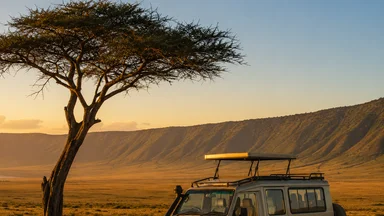
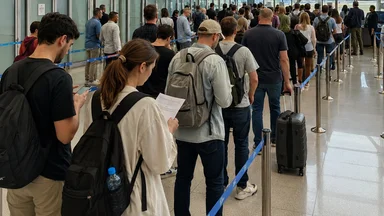
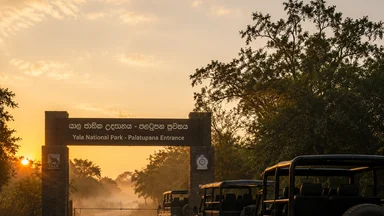
At 6:30 a.m. on a July morning, the dirt road leading to Loduare Gate is already lined with Land Cruisers, their diesel engines idling in the cool highland air. Drivers lean against hoods, sipping chai and checking phones. By 7 a.m., the queue stretches half a kilometer. Rangers at the gate hold clipboards with a printed list: the day's permit quota for the crater floor. Once the tally hits roughly 200 vehicles, the gate closes to new entries until someone leaves. In peak season—June through August and December through February—that closure often comes before 10 a.m. Late-arriving travelers, some who drove three hours from Arusha, are turned away. They have paid park fees and accommodation deposits, but they cannot descend.
The 7 a.m. Queue at Loduare Gate
The scene repeats daily. Dozens of Land Cruisers, each carrying four to six passengers, converge on the gate from lodges in Karatu and Ngorongoro Conservation Area campsites. Most drivers have pre-booked permits online, but the system does not guarantee a specific entry time. The queue order, combined with the rolling cap, determines who gets in. Rangers on duty count vehicles manually, sometimes using walkie-talkies to coordinate with colleagues at the crater floor descent point. By 9 a.m., the waiting area is crowded with frustrated travelers whose operators failed to secure early slots.
The cap applies only to the crater floor, not the rim or the conservation area at large. Visitors can still drive along the rim, visit viewpoints, and hike the Empakaai Crater without restriction. But the main attraction—the dense wildlife on the crater floor—is off-limits once the quota is met. For most tourists, that is the entire point of coming. Operators who arrive late sometimes negotiate with rangers for a wait, but there is no guarantee. The rule is enforced consistently, especially since a 2020 policy change.
Peak season magnifies the problem. In July 2024, the Ngorongoro Conservation Area Authority reported that the gate reached capacity by 8:45 a.m. on 18 out of 31 days. Travelers who booked crater descents for the afternoon found themselves stuck at the rim, watching vehicles below through binoculars. The only workaround is to be in the queue before dawn—or to visit in a month when the queue does not form at all.
Why 200 Vehicles Became the Ceiling
The cap originated from a 2019 study commissioned by the Ngorongoro Conservation Area Authority. Researchers measured road erosion, wildlife disturbance, and vehicle congestion on the crater floor. They found that during peak hours, the density of vehicles around the Gorigor Swamp and Lake Magadi areas exceeded what the animals tolerated. Lions moved away from roads. Flamingos abandoned feeding sites. The study recommended a permanent cap of roughly 200 vehicles on the floor at any given time, with a maximum of six hours per vehicle per day.
The authority adopted the cap in early 2020, just before the pandemic. During lockdowns, the crater floor essentially recovered. By 2022, when tourism rebounded, the cap was enforced strictly. Permit slots are released online 30 days in advance, and roughly 70% of them are snapped up by tour operators within the first 48 hours. The remaining 30% are held for same-day sales at the gate, but those vanish quickly in high season. Unused permits—from cancellations or no-shows—are released 48 hours prior, but the window is narrow and requires constant checking.
Not everyone agrees the cap is necessary. Some operators argue that the real issue is poor scheduling, not vehicle numbers. They point out that the crater floor covers 260 square kilometers—ample space if vehicles spread out. But the authority counters that wildlife tends to concentrate near water sources, creating natural bottlenecks. The debate continues, but the cap remains. As of late 2024, there are no plans to raise it.
To understand the operator perspective, consider the economics. A typical tour company running daily crater descents in peak season may have a fleet of 10–15 vehicles. If each vehicle carries an average of five passengers paying roughly US$300–500 per person for the crater descent package, a single day of being turned away can mean a revenue loss of US$15,000–37,500 across the fleet. That pressure drives some operators to queue from 4 a.m. or to bribe rangers—though the authority claims enforcement is clean. Anecdotally, a driver in Karatu told me in August 2024 that he had paid a "facilitation fee" of roughly US$50 to a ranger to jump the queue. Whether that is widespread is unclear, but it suggests the cap creates an underground market.
Off-Season Windows That Actually Work
The simplest way to avoid the gate queue is to visit during the short rains: November and April. These months see roughly 40% fewer visitors than peak season, according to Tanzania National Parks data. The rain usually falls in short afternoon bursts, leaving mornings clear for game drives. The landscape turns green, and the wildlife density remains high—animals do not migrate out of the crater. Predators are often easier to spot because the grass is shorter after the rains.
Lodge rates drop significantly. A tented camp on the rim that charges US$500–700 per night in July may ask US$250–350 in November. Permits are also easier to secure last-minute. I have booked a crater descent three days in advance in mid-November without any issue. The gate queue that morning consisted of five vehicles. We were on the crater floor by 6:15 a.m., alone except for a distant hyena.
The trade-off is weather unpredictability. Some Novembers see heavier than usual rains that can turn the descent road into a muddy slide. In April 2023, the road was closed for two days after a landslide. But these events are rare. For most of the short rains, travel is straightforward. The key is to pack a rain jacket and flexible plans.
Another underutilized window is late January, after the Christmas rush but before the February peak. Schools in Europe and North America are back in session, and the crater sees a brief lull. Permit availability improves, and the wildebeest calving season in the southern Serengeti also draws some crowds away from Ngorongoro. Additionally, consider early March: the long rains have not yet begun, and visitor numbers are still moderate. In March 2024, I observed gate queues of only 10–15 vehicles at 7 a.m., compared to 50+ in July. The weather is dry and warm, with daytime temperatures around 22–25°C on the floor.
For those who must travel in peak season, a practical hack is to book a crater descent for the last slot of the day (2–4 p.m.). Most morning vehicles have left by then, and the cap is rarely an issue. The afternoon light is beautiful, and lions often become active near Gorigor Swamp. However, you lose the early morning golden hour, and some lodges charge extra for late departures. Weigh the trade-off based on your priorities.
A 3-Day Crater Itinerary Without the Rush
For travelers with limited time, a three-day loop from Arusha can be humane and rewarding if paced correctly. Day one: fly or drive from Arusha to Karatu, a town on the crater rim. The drive takes roughly three hours on a paved road. Check into a lodge or tented camp outside the conservation area—rates are lower, and altitude adjustment begins. Karatu sits at around 1,300 meters, a gentler introduction than the rim's 2,200 meters.
Day two: enter the crater at 6 a.m., before the queue builds. The descent road winds through forest and opens onto the floor. Spend four to five hours exploring the central plain, Lake Magadi, and the Gorigor Swamp. Exit by 2 p.m. to avoid the afternoon rush and the altitude fatigue that sets in after several hours. Return to Karatu for a relaxed evening. Total permit cost for the crater descent runs roughly US$200–300 per person (including conservation fees).
Day three: hike the Empakaai Crater, a lesser-known volcanic caldera about a 90-minute drive north. The trail descends into a soda lake surrounded by forest. Fewer vehicles, quieter wildlife viewing. The hike takes about three hours round trip. Then drive back to Arusha in the afternoon. This itinerary avoids the gate queue entirely and leaves space for spontaneous stops.
The catch: you will not see the crater at sunset, which is spectacular but logistically difficult because the exit gate closes at 6 p.m. sharp. If sunset photography is a priority, consider a two-day crater itinerary instead, with one full day on the floor and an overnight at a rim lodge. For example, stay at Ngorongoro Serena Safari Lodge or Ngorongoro Sopa Lodge, both on the rim, and request a late afternoon descent on day one, then an early morning descent on day two. This gives you two different light conditions and doubles your chances of a queue-free entry.
Where Most Visitors Trip Up
The most common mistake is assuming that same-day permits are reliably available at the gate. In peak season, they are not. Travelers who book flights and lodges months in advance often neglect the permit step, assuming it is handled by the operator. Many operators do handle it, but some wait until arrival to purchase—a gamble that backfires regularly. Always confirm that your operator has pre-booked the crater descent slot at least a week before departure.
Another error is underestimating altitude sickness. The crater rim sits at 2,200 meters, and the floor at about 1,800 meters. Some visitors feel headaches, nausea, or shortness of breath, especially if they fly directly from the coast. Spending a night in Karatu (1,300 meters) before ascending helps. Lodges on the rim often provide oxygen canisters, but prevention is better. I recall a traveler in July 2024 who had to cut his crater visit short after vomiting from altitude sickness—he had flown from Zanzibar that morning and driven straight to the gate.
Packing only safari gear—khakis and shorts—is a third misstep. The rim can be cold in the morning and after rain. Temperatures drop to 8°C in July and 10°C in November. A fleece jacket and windbreaker are essential. Conversely, the floor can be hot by midday. Layering is key. Also, bring a reusable water bottle; dehydration worsens altitude symptoms.
Finally, many visitors try to cram too much into a single crater descent. The six-hour limit feels generous but evaporates quickly. Focus on two or three areas rather than racing across the floor. The Gorigor Swamp and the lake edges offer the highest density of predators and birds. The Lerai Forest is good for elephants and baboons. Driving everywhere guarantees traffic jams and disappointment. A better approach: pick one area for the first two hours, then move to a second area for the remaining time. Stop frequently, turn off the engine, and listen. The silence on the crater floor is remarkable.
What a 7-Day Humane Pace Looks Like
A week in northern Tanzania allows a relaxed circuit without the checklist mentality. Start with two full days in Ngorongoro Crater—one for the floor, one for the rim viewpoints and Empakaai. This spreads the vehicle quota risk: if the first day's descent is delayed, the second day offers a backup. Alternatively, book a crater descent for midday on the first day and early morning on the second, covering different light conditions.
Add Lake Manyara for a half-day. The lake's alkaline waters attract flamingos and pelicans, and the groundwater forest has troops of baboons and the occasional tree-climbing lion. The park is compact—a single road runs along the escarpment—so a morning drive suffices. Then drive to Tarangire National Park, about two hours east. Tarangire's baobab-studded landscape is iconic, and its elephant herds are among the largest in East Africa. A full day there, with a picnic lunch, is enough to see the variety.
Build rest days into the itinerary. Karatu has several coffee lodges where you can spend an afternoon on a veranda overlooking the escarpment. The altitude and pace of safari can be exhausting; a day without a game drive helps. Avoid driving more than three hours per day between destinations. The roads are mostly paved but winding, and a driver who rushes is a driver who misses wildlife.
A 7-day trip also allows flexibility for weather. If the crater is cloudy one morning, swap the itinerary: do Tarangire first, crater later. The permit system rewards patience, not rigidity. For instance, in my own 7-day trip in August 2024, I planned crater for day 3 but a thunderstorm moved in; I switched to Lake Manyara on day 3 and crater on day 4, which was clear. The permit for crater was already booked, and the authority allowed a one-day shift without penalty—a flexibility not widely advertised.
Consider also a visit to the Olduvai Gorge, a 45-minute drive from the crater rim. The museum and guided walk take about two hours and offer a fascinating counterpoint to wildlife viewing: the archaeological site where the Leakeys discovered early hominid fossils. It breaks up the safari routine and adds depth to your understanding of the region.
The Permit That Rewards Patience
The cap is not an obstacle; it is a filter. Visitors who work around it—by arriving early, visiting off-season, or booking smartly—find a crater floor that feels almost private. The same permit that frustrates the noon crowd can be a ticket to solitude. Consider booking a crater descent for 2–4 p.m. slot, when most morning vehicles have left. The afternoon light softens, casting long shadows from the crater walls. Lions often stir near Gorigor Swamp in the late afternoon, and vehicles are fewer. The experience is quieter, more intimate.
This requires planning. Afternoon slots are less popular and easier to secure, but you still need to be at the gate by 1:30 p.m. to descend. The trade-off: you lose the early morning golden hour, but you gain the late-afternoon glow and reduced competition. Some photographers prefer it. The same permit, different timing.
The cap also means that the crater floor is not overrun. In 2023, a study by the African Wildlife Foundation noted that wildlife viewing quality in Ngorongoro remained high compared to other East African parks where vehicle limits are looser. The lions and hyenas are habituated but not stressed. The ecosystem functions. That is a win for everyone, even the drivers idling in the morning queue.
In the end, the Ngorongoro permit cap is a reminder that good travel requires patience. The crater will be there tomorrow. The animals will be there. The trick is to arrive before the queue—or to come back in November, when the gate is quiet and the grass is green. The cap, for all its frustrations, preserves the very experience that draws us here: a wild place that is not entirely tamed by tourism.