Turkey Intercity Bus Math Favors Nevşehir Depots Over Istanbul Booking Windows
Every travel blog tells you to book intercity bus tickets in Turkey days ahead, especially for popular routes like Istanbul to Cappadocia. But that advice, repeated across forums and guidebooks, ignores a basic fact: the pricing math flips once you leave Istanbul. Nevşehir's depots, not the online portals or Istanbul's Esenler terminal, offer the best deals on the same buses. The trick is knowing where and when to buy.
The Istanbul Terminal Trap That Costs You Hours
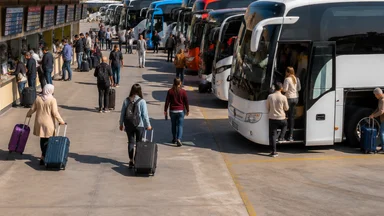
Istanbul's main bus station, Esenler Otogar, is a cavernous hub where three firms—Kamil Koç, Metro Turizm, and Ulusoy—control the majority of long-distance departures. Their online booking systems use dynamic pricing that spikes for popular windows: Friday evening, Sunday return, and any holiday period. A one-way ticket from Istanbul to Nevşehir booked a week in advance might show 350–400 Turkish lira. Walk up to the same counter on the day of travel, and the price can be 10–20% higher, because the system assumes urgency.
Yet that same bus, if boarded in Nevşehir heading toward Ankara or Antalya, often sells for 30–40% less at the depot than the online advance fare. The reason is simple: competition. Nevşehir's terminal hosts a dozen companies—including smaller lines like Süha Turizm and Aksu—all fighting for the same passengers on the same corridors. In Istanbul, the big three can afford to hold prices. In Nevşehir, nobody has that luxury.
Kamil Koç and Metro Turizm both use yield-management software that adjusts fares based on demand and remaining seats. But the algorithm treats Istanbul departures as premium. A seat on the 10:00 Istanbul–Nevşehir coach might cost 380 lira online, while the identical coach returning from Nevşehir two days later shows 220 lira at the depot. The difference isn't service quality; it's market power.
For the traveler, this means the common advice to "book ahead for peace of mind" is correct only for Istanbul departures. Everywhere else, the walk-up fare is cheaper and just as reliable—provided you arrive at the terminal with some flexibility.
Consider a concrete example: a family of four traveling from Istanbul to Cappadocia during the April spring break. Booking online two weeks in advance, they might pay around 1,400 lira for four seats on a Kamil Koç coach. If instead they flew into Kayseri (often cheaper than the bus for a family) and then bought walk-up tickets from Kayseri to Nevşehir at the depot, the four tickets would total roughly 200–280 lira—a saving of over 1,000 lira. The trade-off is the flight cost and the need to arrange airport transfer, but for many families the math favors the flight-plus-depot combination.
Another scenario: a solo backpacker on a flexible itinerary. They can arrive in Nevşehir by overnight bus from Istanbul (booked online for the Istanbul leg, which is unavoidable) and then explore Cappadocia for a few days. When ready to move on, they walk to the Nevşehir depot and buy a ticket to Antalya for around 200–250 lira at the counter. The online price for the same bus would be 300–350 lira. Over a two-week trip with three or four intercity legs, the savings add up to the cost of a night's accommodation.
Why Nevşehir's Depot Density Changes the Game
Nevşehir's bus terminal is modest—a single building with a row of ticket offices and a waiting area—but it punches above its weight. As of 2025, the depot lists 14 companies serving routes to Ankara, Kayseri, Antalya, İzmir, and beyond. Many run hourly or every two hours during daylight. The density means you can arrive without a ticket, compare prices on the electronic boards, and buy the cheapest option for your destination.
Price boards are displayed openly, and depot managers routinely undercut each other. On a Tuesday morning in late April 2025, a reporter observed three companies selling Nevşehir–Ankara tickets for 180, 190, and 195 lira respectively. The cheapest was a lesser-known line with a slightly older coach; the priciest was Kamil Koç with WiFi and snacks. All three departed within 45 minutes of each other.
Contrast that with Istanbul's Esenler, where the dominant firms occupy prime counters and smaller operators are pushed to the far end of the terminal. The walk from the metro entrance to the Ulusoy desk takes ten minutes; the walk to a smaller company takes fifteen. That friction discourages comparison shopping. In Nevşehir, everything is within 20 meters.
This density also affects reliability. If a bus is full, another leaves in 30–60 minutes. During peak summer, Nevşehir–Göreme minibuses run every 20 minutes until 9 p.m. You never need to book ahead for that 25-kilometer hop. The same logic applies to longer routes: Nevşehir–Antalya has at least eight daily departures in high season, with walk-up availability almost guaranteed except on major holidays.
For travelers who prefer comfort, the trade-off is that smaller companies may use older coaches with less legroom and no onboard toilet. However, for a 3–4 hour journey like Nevşehir–Ankara, that's acceptable for many. If you need a luxury coach with reclining seats and meal service, stick with Kamil Koç or Metro Turizm—but expect to pay 10–15% more at the depot than the smallest operator.
A Seven-Day Itinerary That Skips the Booking Websites
Here is a realistic week that buys every bus ticket at the depot, not online. It assumes you arrive in Nevşehir by air or overnight coach from Istanbul, and it uses the local depot network for all intercity moves.
Day 1: Arrive Nevşehir, buy next morning's ticket to Göreme at the depot. Nevşehir's terminal has a counter for Göreme-bound minibuses every 30 minutes. The fare is around 30–40 lira, same as online but no service fee. You can also buy a return ticket for the same price, though it's unnecessary—the minibuses run frequently.
Days 2–3: Göreme Valley walks, then walk-on bus to Ürgüp. From Göreme's main square, dolmuş (shared minibuses) depart for Ürgüp every 15 minutes. The fare is negotiable but typically 30–40 lira. No reservation needed. In Ürgüp, you can explore the rock-cut churches and fairy chimneys without a tour bus.
Day 4: Ürgüp to Kayseri via hourly minibus. The Ürgüp–Kayseri route runs at least once per hour until early evening. The 90-minute ride costs around 50–70 lira. Kayseri's bus terminal is larger but still has walk-up counters for onward routes. If you're heading to Ankara, the next bus is likely within two hours.
Days 5–6: Kayseri to Ankara, then overnight coach to Istanbul at depot price. Kayseri–Ankara buses depart every hour or two. A walk-up ticket costs roughly 150–200 lira. From Ankara, you can catch an overnight coach to Istanbul. The Ankara terminal (AŞTİ) is huge, but the same dynamic pricing applies: walk-up is cheaper than advance for most departures except Friday and Sunday evenings.
Day 7: Istanbul exit – only here must you pre-book for airport transfer. Istanbul's airport shuttles (Havaist) and the metro to the new airport are best booked via the official app, because walk-up queues can be long. But for the intercity bus back to Nevşehir or onward to another city, you're better off buying at Esenler on the day—just expect to pay the higher Istanbul price.
This itinerary avoids any online booking for intercity legs. The only exception is the airport transfer on day 7, which is a local service, not a bus company route.
If you have more time, consider extending the itinerary to include Antalya. From Nevşehir, a direct bus to Antalya takes about 8–9 hours and costs around 200–250 lira at the depot. In Antalya, the bus terminal (Otogar) also has competitive walk-up fares for routes to İzmir and Fethiye. The same depot-density advantage applies in many Turkish cities, not just Nevşehir.
The Timing Patterns Locals Rely On
Turkish intercity bus pricing follows predictable rhythms that reward flexibility. Midweek departures from Nevşehir see 20–30% empty seats, driving spot rates down. If you can travel Tuesday through Thursday, you'll pay less and have more choice. Monday mornings are also quiet, as most weekly travelers return on Sunday.
Friday and Sunday evening buses to Istanbul fill first, but prices stay flat—the companies don't raise rates for those departures, they just sell out. If you need to travel then, buy your ticket at the depot the morning of, or risk a sold-out bus. In practice, a backup bus is often added on high-demand corridors, but it may depart 30–60 minutes later.
Ramadan shifts the schedule significantly. During the fasting month, many bus companies adjust departure times to avoid travel during iftar (the evening meal). Buses that normally leave at 6 p.m. may move to 8 p.m. or later. Depot queues shorten by half because fewer people travel during the day. If you're in Turkey during Ramadan, check with the counter clerk for the latest departure times—online schedules are often not updated.
Winter months (November through February) have fewer buses overall—some companies reduce frequency by 30–40%—but last-minute discounts deepen. A Nevşehir–Antalya ticket that costs 250 lira in August might drop to 180 lira in January if bought at the depot. The catch is that buses may be older models with less reliable heating. Ask to see the coach before buying if you're particular about comfort.
One counter-argument to the depot strategy is that during peak summer, especially around major holidays like Eid al-Adha, depots can be chaotic and buses sell out hours in advance. In such cases, buying a ticket a day ahead is wise. However, even then, the depot price is usually the same as the online price, and you avoid service fees. The key is to assess demand: if the terminal is crowded and buses are lining up, buy a ticket for the next departure immediately. If it's quiet, you can afford to wait and compare.
What the Points and Miles Advice Misses
Credit-card travel rewards are nearly useless for Turkish intercity buses. The Chase Sapphire Preferred card, recently updated with a larger hotel credit and new bonus categories, does nothing for bus depot cash purchases. Neither do the Chase Freedom 5% categories, which as of mid-2026 cover Amazon, Chase Travel, Feeding America, and Whole Foods—none of which sell Turkish bus tickets.
The Points Guy's advice about activating quarterly categories applies only to US-based spending. Turkish bus companies accept cash or local debit cards (Bankkart, İşbank, etc.). International credit cards are sometimes accepted at major terminals but often incur a 2–3% surcharge. The cheapest method is cash, followed by a no-foreign-transaction-fee debit card withdrawn from an ATM.
No airline or credit-card portal sells intercity bus tickets in Turkey at competitive rates. You can book through websites like obilet.com or biletall.com, but those add service fees of 5–10 lira per ticket and don't offer rewards. For a Nevşehir–Ankara trip costing 180 lira, the fee is negligible, but the principle stands: travel-rewards schemes are irrelevant here.
If you have a Chase Sapphire Preferred, the new 4:3 Hyatt transfer ratio is a blow for hotel stays, but it doesn't affect bus travel. The card's new hotel credit (reportedly US$50) can be used at Turkish hotel chains like Hilton or Marriott, but not at bus depots. For the budget-conscious traveler, the best strategy is to ignore rewards and pay cash at the counter.
For those who prefer to minimize cash handling, a no-foreign-transaction-fee debit card from a bank like Charles Schwab or Revolut works well. Withdraw enough lira for a few days from an ATM at the airport or a bank branch, and use that for bus tickets. Avoid currency exchange booths at bus terminals, which often offer poor rates.
One Rule for the Whole Trip: Buy at the Boarding Gate
The single rule that simplifies everything: buy your ticket at the bus terminal on the day of travel, no more than an hour before departure. This works for all daytime buses on major corridors—Nevşehir–Ankara, Nevşehir–Antalya, Kayseri–Ankara, and even Ankara–İzmir. The only exceptions are overnight sleeper coaches with assigned reclining seats, which sometimes sell out, and holiday weekends (Eid al-Fitr, Eid al-Adha), when advance booking is wise.
A Nevşehir–Antalya direct bus costs around 200–250 lira at the depot versus 300–350 online. Ankara–İzmir walk-up fares are negotiable 15 minutes before departure—especially if the bus has empty seats. The counter clerk may offer a discount to fill the coach. This isn't official policy, but it happens often enough to be worth asking: "İndirim var mı?" (Is there a discount?)
Daytime buses on all major corridors accept cash and issue a printed ticket on the spot. You don't need to show ID; the ticket is your proof. If you lose it, the driver may charge again, so keep it in a safe pocket. For the overnight Nevşehir–Istanbul route, booking a day ahead can secure a lower berth (alt kat) instead of an upper, which is worth the small premium for legroom.
This approach runs counter to the travel-blog orthodoxy that recommends booking everything in advance. But the orthodoxy was written for Western European train networks and American flights, where dynamic pricing punishes last-minute buyers. Turkey's intercity bus market is different: competition is fierce, capacity is high, and the depots are the best place to buy. The only time you'll regret not booking ahead is if you need a specific seat on a sold-out holiday weekend. Otherwise, walk up, compare, and ride.
For similar fare logic on other networks, see Poland PKP Intercity Advance Fare Math and Nairobi Matatu Route Math. Both show how local depot dynamics beat online booking.