Mexico City Tap Water Math Favors 17-Peso Garrafones Over Hotel Bottle Service
Mexico City’s tap water is not potable for visitors. Hotels know this, and they price their mini-bar bottles accordingly—50 to 80 pesos for 600 milliliters. Meanwhile, every corner store and Oxxo sells a 19-liter garrafon of purified water for 17 to 20 pesos. The per-liter cost of hotel water is roughly 50 times higher. Yet most travel coverage ignores this daily drain, leaving tourists to pay inflated prices for something they could get for pocket change. This article walks through the math, the logistics, and the gear that makes switching painless.
The 17-Peso Garrafón vs. the Mini-Bar Markup
A 600ml bottle of water in a mid-range Mexico City hotel typically costs 50–80 pesos. At the high end, that’s about 133 pesos per liter. A 19-liter garrafon from Oxxo or a corner abarrotes runs 17–20 pesos, or roughly 1 peso per liter. The difference is stark: hotel bottle service is 50 to 130 times more expensive per liter. Even factoring in a 10–15 peso deposit on the garrafón, the savings are enormous over a week-long stay.
Refill stations—small shops marked “agua purificada”—go further. They refill your existing garrafón for 5–7 pesos per 19 liters. That’s about 0.3 pesos per liter, or roughly 400 times cheaper than hotel mini-bar water. These stations are ubiquitous in residential neighborhoods; you’ll spot them by the stacked jugs outside. Most tourists never step inside.
Conventional travel coverage tends to focus on hotel amenities and restaurant recommendations, not on the mundane cost of drinking water. But water is a daily necessity. A family of four spending a week in Mexico City could easily drop 1,000–2,000 pesos on hotel bottled water alone. Switching to garrafones cuts that to under 100 pesos—and that’s before considering the deposit refund.
The math is simple, but the inconvenience of lugging a 19-liter jug deters many visitors. Yet the savings are so large that even a single garrafón purchase pays for itself within two days. The real obstacle is not cost but awareness. Most guidebooks skip this detail entirely.
Why Tap Water Is a Non-Starter for Visitors
Mexico City’s municipal water system draws from the Cutzamala system and local wells. While treatment plants meet national standards, the aging pipe network introduces sediment, bacteria, and sometimes parasites by the time water reaches the tap. The U.S. Centers for Disease Control and Prevention (CDC) advises travelers to avoid tap water throughout Mexico, including Mexico City. Locals often boil or filter their water, but visitors—especially those unaccustomed to local microbes—risk gastrointestinal illness commonly called traveler’s diarrhea.
The risk is not theoretical. Studies suggest up to 40% of travelers to Mexico experience some form of digestive upset. While most cases are mild, they can derail a trip. Hotels exploit this vulnerability by positioning bottled water as a necessity—and charging accordingly. The mini-bar bottle is convenient but priced as a captive audience product.
Some higher-end hotels install filtered water systems in rooms, but these are rare. Most rely on the same 19-liter garrafones you can buy on the street—they simply mark them up by putting them in your room. A 600ml bottle on the nightstand may have been poured from a garrafón that cost the hotel less than 1 peso per liter.
Airbnb hosts sometimes leave a garrafón for guests, but it’s not guaranteed. Many guests don’t know to ask for the refill number. The result: tourists pay a premium for something locals buy for pocket change.
The Garrafón Distribution Network You Never See
Every morning before 7 a.m., trucks rumble through Mexico City’s colonias delivering garrafones to homes, corner stores, and food stalls. The system is remarkably efficient. A driver typically carries 100–150 jugs, swapping empties for full ones in seconds. Each jug is reused 20–40 times before being recycled. The deposit system—usually 10–15 pesos per jug—ensures returns.
Oxxo, 7-Eleven, and corner abarrotes all stock garrafones. You pay the deposit once and get it back when you return the empty. Many shops also sell hand pumps and sport caps that fit standard garrafón threads. Street food stalls use garrafones for aguas frescas and bottled water for customers. The system is invisible to tourists because it operates in residential and commercial back channels, not in hotel lobbies.
Delivery apps like Rappi and Uber Eats will bring garrafones to your door for a small fee. You can order one to your Airbnb or hotel room. Some hotels allow delivery to the front desk, though policies vary. The key is knowing it exists.
The environmental angle is also worth noting. Single-use plastic bottles are a major waste stream in Mexico City. The city’s PET recycling rate hovers around 30%, meaning most bottles end up in landfills or streets. A reusable garrafón system cuts personal plastic waste by roughly 90% compared to buying individual bottles.
Three Products That Make Garrafón Use Practical
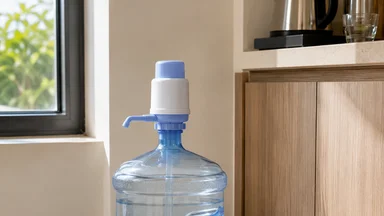
Lugging a 19-liter jug back to your hotel room is awkward. Three inexpensive products solve this. First, a collapsible 5-liter soft bottle from Platypus or similar brands costs around $15 USD and folds flat when empty. Fill it from your garrafón for day trips. Second, a hand pump dispenser—available on Mercado Libre for roughly 150 pesos—sits on top of the garrafón and dispenses water without lifting the jug. Third, a reusable sport cap that fits standard garrafón threads (often sold at Oxxo for 20 pesos) lets you drink directly from the jug.
For those staying in Airbnbs with questionable tap water, a UV purifier stick like SteriPEN offers a backup. It neutralizes most pathogens in 60 seconds and works on tap water if you’re willing to trust local filtration. But the garrafón is simpler and cheaper.
These items are rarely mentioned in hotel packing lists. Most travel guides assume you’ll buy single-use bottles at convenience stores—which you can, but at 10–15 pesos per 600ml, the cost adds up. A garrafón plus a hand pump costs about the same as six convenience-store bottles and provides 30 times the volume.
The gear pays for itself within a few days. After that, you’re saving money and reducing plastic waste.
How Hotels and Airbnbs Price Water Differently
Mid-range hotels in Mexico City typically offer two small bottles of water free per day. Additional bottles cost 40–50 pesos each. Luxury hotels may give a welcome bottle gratis, then charge 80+ pesos for subsequent ones. Some hide the price until checkout. The markup is consistent across brands, from chain properties to boutique hotels.
Airbnb hosts vary widely. Some leave a full garrafón for the duration of your stay. Others provide a few single-use bottles and expect you to buy more. A few charge per refill—usually 20–30 pesos per garrafón—which is still far cheaper than hotel rates. The key is to ask at check-in: “Is there a garrafón? What number do I call for a refill?” Many hosts have a local water delivery number they can share.
For longer stays, ordering your own garrafón through Rappi is straightforward. The app has a “Agua” category with multiple brands. Delivery takes 30–60 minutes. You pay 17–20 pesos plus a small delivery fee. The empty can be left for pickup on delivery day.
Some travelers worry about the taste or safety of garrafón water. Reputable brands like Bonafont, Ciel, and Epura are purified through reverse osmosis or ozonation. They meet the same standards as bottled water. The jugs are sealed at the plant; tamper-evident caps are standard.
The Hidden Cost of Plastic Bottle Tourism
The average tourist in Mexico City buys 3–4 single-use 600ml bottles per day, according to informal surveys by travel blogs. That’s 12–16 bottles per person per week. At 10–15 pesos each, the weekly cost hits 120–240 pesos per person. For a family of four, that’s 500–1,000 pesos—roughly the cost of a nice dinner out.
Beyond cost, the plastic waste is significant. Mexico City generates roughly 13,000 tons of waste daily, with plastic bottles a visible component. The city’s recycling infrastructure struggles; only about 30% of PET bottles are recycled. The rest go to landfills or the environment. Switching to garrafones reduces bottle consumption by 90% or more per person.
The garrafón system is not perfect. The jugs require energy to transport and clean. But the reuse rate—20–40 cycles per jug—makes it far more efficient than single-use plastic. Some environmental groups advocate for refill stations that fill your own container, but these are rare in Mexico City. The garrafón is a practical middle ground.
Tourists often overlook this because they don’t see the waste they generate. Hotel housekeeping removes empty bottles discreetly. But the environmental footprint adds up. A week of single-use bottles per tourist creates roughly 2–3 kilograms of plastic waste. Over a year, millions of visitors contribute thousands of tons.
Practical Script: How to Garrafón Like a Local
Step one: Locate the nearest Oxxo or agua purificada shop. Google Maps search “Oxxo” or “agua purificada” works. Step two: Pay 17–20 pesos plus a 10–15 peso deposit. The total is usually under 35 pesos. Step three: Carry the jug with two hands—19 liters weighs about 19 kilograms. If you’re staying nearby, it’s manageable. Longer distances, use a delivery app. Step four: When empty, return the jug to any participating store for your deposit back, or swap it for a full one (you pay only for the water, not the deposit again). Step five: Use a hand pump or pour into a reusable bottle. A sport cap that screws onto the garrafón neck lets you drink directly.
Pro tip: Rappi and Uber Eats both deliver garrafones. Search “garrafón de agua” and choose a brand. Delivery fee is typically 15–25 pesos. The driver will leave the full jug and take your empty if you leave it outside. This is easiest for Airbnb stays.
If you’re in a hotel that prohibits outside food and drink, check with the front desk. Some allow garrafones in rooms; others don’t. In that case, consider buying a 5-liter collapsible bottle and filling it at a nearby Oxxo’s water refill station—many have them for 5–7 pesos per 19 liters. You can refill the small bottle daily.
The system takes one trip to learn. After that, it becomes routine. And your wallet—and the environment—will thank you.
Trade-Offs: When Hotel Bottles Might Still Make Sense
Despite the clear cost advantage, garrafones aren’t for every traveler. If you’re on a tight itinerary—say, a two-day business trip with back-to-back meetings—the time spent buying and returning a garrafón may not be worth the savings. A few extra pesos for convenience can be a reasonable trade-off. Similarly, if you’re staying in a hotel that strictly prohibits outside food and drink, and you’re not willing to negotiate, single-use bottles from the hotel or nearby convenience store may be your only option.
Another consideration is weight. Lugging a 19-kilogram jug up several flights of stairs in a walk-up building is impractical for many. In that case, delivery apps or buying smaller 1.5-liter bottles from Oxxo (typically 10–15 pesos each) may be a better compromise. While those smaller bottles are more expensive per liter than a garrafón, they still beat hotel mini-bar prices by a wide margin—roughly 7–10 pesos per liter versus 100+ pesos.
There’s also the matter of space. A garrafón takes up floor space in a small hotel room. If you’re traveling light and don’t want the jug in your way, a collapsible 5-liter bottle refilled daily at a purificadora might be a smarter fit. The per-liter cost is slightly higher than a garrafón (around 1–2 pesos per liter) but still far cheaper than hotel water.
Finally, some travelers are simply uncomfortable with the idea of drinking from a reused plastic jug, even if it’s industrially cleaned. For them, buying sealed single-use bottles in bulk from a supermarket (a 12-pack of 600ml bottles often costs around 60–80 pesos) offers a middle ground: lower cost than hotel bottles, but still disposable. The trade-off is more plastic waste. Weighing these factors helps each traveler find their own balance.
Case Study: A Week in Condesa with a Garrafón
To illustrate the practical savings, consider a hypothetical week-long stay in the Condesa neighborhood. A couple checks into an Airbnb near Parque México. At check-in, they ask the host about water. The host says there’s no garrafón, but the nearest Oxxo is two blocks away. The couple walks over, pays 35 pesos total (20 pesos for the garrafón, 15 deposit), and carries it back—about 5 minutes each way. They also buy a hand pump for 150 pesos at a nearby hardware store.
Over the week, they drink about 3 liters per day combined, so the garrafón lasts nearly a week. On day six, they return the empty to Oxxo, get their deposit back, and buy a new garrafón for 20 pesos. Total water cost for the week: 20 pesos (first garrafón) + 20 pesos (second) + 150 pesos (hand pump, a one-time purchase) = 190 pesos. Without the garrafón, buying 600ml bottles at 15 pesos each would cost roughly 525 pesos (35 bottles at 15 pesos). The garrafón saves 335 pesos—enough for a nice meal at a local fonda. And the hand pump can be used on future trips.
If they had relied on hotel mini-bar bottles at 60 pesos each, the cost would have been 2,100 pesos for the same 35 bottles. The garrafón saves over 1,900 pesos—roughly US$95. That’s a significant sum for a budget-conscious traveler.
This example assumes moderate water consumption. A family of four drinking 6 liters per day would need two garrafones per week, costing about 40 pesos total (plus deposit). Comparable hotel water would cost 4,200 pesos. The savings scale with group size.
Environmental Impact: Beyond the Wallet
The environmental benefits of switching to garrafones are substantial but often overlooked. Each tourist who switches from single-use bottles to a garrafón for a week prevents roughly 30 plastic bottles from entering the waste stream. If 10% of Mexico City’s 10 million annual international visitors made the switch, that would be 30 million fewer bottles per year—enough to fill several football fields.
However, the garrafón system isn’t zero-impact. The trucks that deliver garrafones burn fuel, and the cleaning process uses water and chemicals. A life-cycle analysis would likely show that garrafones have a lower carbon footprint than single-use bottles, but the exact difference depends on factors like delivery distance and recycling rates. For the environmentally conscious traveler, the best option might be a reusable bottle filled at a purificadora that allows you to fill your own container—though such stations are less common.
Some critics argue that the garrafón deposit system encourages returns but still relies on plastic. A more sustainable long-term solution would be widespread tap water filtration, but that’s not currently feasible for most visitors. In the meantime, the garrafón strikes a practical balance between cost, convenience, and environmental responsibility.
Ultimately, the choice between hotel water and garrafones comes down to awareness and a small upfront effort. The numbers are clear: garrafones save money, reduce plastic waste, and are widely available. With a little planning, any traveler can tap into the system that locals have used for decades. The next time you check into a Mexico City hotel, consider skipping the mini-bar and walking to the nearest Oxxo instead. Your wallet—and the planet—will thank you.