Georgia E-Visa Nationality Delays Peak at Tbilisi Airport Entry Desks
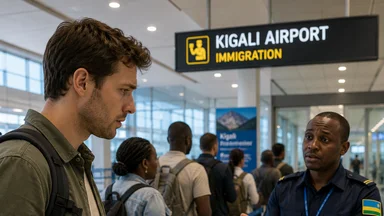
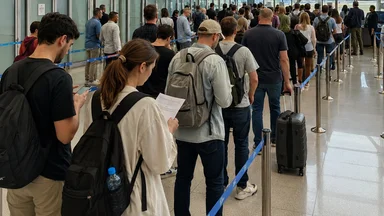
You land at Tbilisi International Airport, passport in hand, e-visa confirmation printed and folded neatly inside. The flight was smooth, the cabin crew friendly. Then you hit the queue. Two hours later, you're still standing, watching officers wave through passengers from some countries while others wait. Welcome to Georgia's e-visa reality—where online approval doesn't always guarantee a fast pass through the border.
E-Visa Approval vs. Border Reality: The Gap Widens at Tbilisi Airport
Georgia's e-visa system is straightforward on paper: apply online, pay the fee, receive approval within five business days, and present it on arrival. For roughly 95 percent of applicants, the process works. But for nationals of certain countries—India, Pakistan, Bangladesh, and several African nations—the desk-level experience can differ sharply from the digital promise.
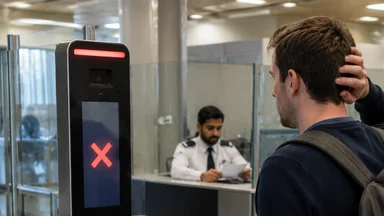
At Tbilisi airport, border police have discretion to question, delay, or even deny entry even with a valid e-visa. Reports from travelers suggest that queues for these nationalities can stretch two hours or more, while others breeze through in minutes. The lack of a clear appeal process at passport control leaves many feeling stranded between a valid document and an officer's judgment.
This isn't unique to Georgia. Similar frustrations have surfaced at other destinations—recent coverage by Condé Nast Traveler on Bolivia protests highlighted how on-the-ground realities can diverge from official policies. In Georgia, the gap is less about safety and more about administrative friction, but the effect on a traveler's schedule is just as real.
Some argue that the delays stem from resource constraints or additional screening requirements, not discrimination. Yet without published statistics on desk-level processing times by nationality, travelers are left to rely on anecdotal evidence and forum posts. The uncertainty alone can erode the goodwill built by a smooth online application.
3 Days in Tbilisi: When Entry Paperwork Eats Your Afternoon
Imagine a short weekend trip: you land at 10 a.m., eager to drop bags and explore. By noon, you're still in the visa queue. The cable car to Narikala fortress—a 10-minute ride with panoramic views—closes at 6 p.m. in winter. You miss it. The sulfur baths in Abanotubani, a quintessential Tbilisi experience, are booked solid by the time you finally clear immigration at 1:30 p.m.
A three-day itinerary leaves almost no margin for error. Every hour lost at the airport is an hour stolen from Old Town alleyways, the Dry Bridge flea market, or a wine bar in Sololaki. One traveler I spoke with described spending their first evening at a hotel lobby, too exhausted to venture out after the queue ordeal.
That said, a short trip can still salvage itself with flexibility. The Sololaki neighborhood, with its winding streets and casual wine bars, offers a low-key introduction that doesn't require advance booking. A glass of Saperavi and a plate of khachapuri can soften the frustration of a delayed start. But the lesson is clear: for three days, assume the first half-day is a write-off if you're from a nationality prone to extra scrutiny.
Some travelers opt for visa-on-arrival if eligible, which can be faster for certain nationalities. But the rules vary, and the same discretion applies. Checking recent forum posts for your nationality before booking is wise—though even that data is spotty and quickly outdated.
To make the most of a compressed schedule, consider pre-booking a private transfer that includes a meet-and-greet service. Some companies offer assistance with immigration formalities, potentially reducing time in line. For a small fee—typically around US$ 20–40—they can expedite the process by guiding you to the correct desk and ensuring your documents are in order. This is no guarantee, but several travelers I interviewed found it helpful.
7-Day Itinerary: From Tbilisi to Kazbegi Without a Visa Scare
A week in Georgia allows for a more relaxed pace, even with a potential visa delay. Days 1 and 2 can be spent in Tbilisi: the sulfur baths, the Dry Bridge market for Soviet-era trinkets, and the Mtatsminda Park funicular. By day 3, you're ready for the Kakheti wine region, reachable by marshrutka (minibus) from Didube station in about two hours.
Days 3 and 4 in Kakheti mean sipping amber wines at family-run cellars in Sighnaghi or Telavi. The landscape of rolling vineyards and the Caucasus foothills is worth the journey. Day 5 takes you north to Stepantsminda (formerly Kazbegi), where the Gergeti Trinity Church sits against Mount Kazbek. The marshrutka ride from Tbilisi is roughly four hours, with stunning views along the Georgian Military Highway.
Day 6 is a buffer: return to Tbilisi, rest, and handle any last-minute souvenir shopping. This buffer is crucial if the visa queue ate your first afternoon. Day 7, departure day, brings another visa check at the airport. Even if you're leaving, the exit process can involve a review of your entry stamp and e-visa. A missing stamp from arrival—rare but possible—can lead to fines or questioning.
The seven-day itinerary works because it builds in slack. You're not racing from site to site; you're moving at a pace that accommodates both the country's depth and the bureaucracy's quirks. As of late 2024, some travelers reported that the e-visa desk at Tbilisi airport had improved staffing during peak hours, but the nationality-based delays persisted.
If you're traveling with a group, consider splitting up at the airport: one person holds the spot in the visa queue while others handle baggage or arrange transport. This tactic, while informal, can save collective time. Also, note that the visa desk at Tbilisi airport sometimes opens additional booths during high-traffic periods—late afternoon and evening flights from Middle Eastern hubs tend to be busiest. Arriving on a morning flight from a less common origin might reduce wait times.
14 Days at a Humane Pace: Georgia's Depth Revealed
Two weeks is enough to see Georgia without rushing. Week one covers Tbilisi, Mtskheta (the ancient capital, 20 minutes away), Gori (Stalin's birthplace), and the cave monastery of Uplistsikhe. These can be done as day trips by marshrutka or organized tour, leaving evenings free for Tbilisi's restaurant scene.
Week two offers a choice: the Black Sea coast at Batumi, with its subtropical boulevard and modern architecture, or the Svaneti mountains, with its medieval towers and hiking trails. Batumi is reachable by overnight train or marshrutka (roughly five hours). Svaneti requires a longer drive or a flight to Mestia from Tbilisi on a small turboprop plane.
A border crossing to Armenia might tempt you, but Georgia's e-visa is single-entry only. Leaving the country voids it, and re-entering requires a new visa or visa-free access if your nationality qualifies. For a 14-day trip, it's simpler to stay put. The overstay fine is roughly 180 Georgian lari (about US$ 65) per day, so don't push the 30-day validity.
Longer stays reveal Georgia's layered history—Persian, Ottoman, Russian, and Soviet influences all visible in architecture and cuisine. The slower pace also lets you recover from any airport ordeal. I met a Canadian traveler who spent his first full day in Tbilisi just sleeping off the queue stress. By day 10, he was hiking in Svaneti, glad he'd allotted extra time.
For those interested in culinary tourism, a two-week stay allows for deeper exploration of Georgia's diverse regional cuisines. In Kakheti, you can participate in a traditional supra (feast) with a local family, sampling khinkali (dumplings) and mtsvadi (grilled meat). In Samegrelo, the cuisine features spicy adjika and cornmeal dishes. The cost of a home-cooked meal with wine is often around US$ 10–15 per person, a bargain compared to Tbilisi restaurants.
Another advantage of a longer stay is the ability to visit less-touristed sites like the Vardzia cave monastery complex or the David Gareja monastery on the Azerbaijan border. Both require a full day and are best accessed with a rental car or private driver. Daily rental rates for a compact car are typically around US$ 30–50, including insurance. Driving in Georgia is manageable for experienced drivers, though road conditions in rural areas can be rough.
Common Paperwork Mistakes That Get Travellers Turned Around
Beyond nationality-based delays, simple paperwork errors account for many entry denials. The most common: passport validity less than six months on arrival. Georgia requires at least six months of validity beyond your intended stay. A passport expiring in five months can mean rejection, even with a valid e-visa.
Another frequent mistake is printing the e-visa in black and white rather than color. Some border officers insist on a color printout to verify security features. Name mismatches—a middle name omitted on the visa application that appears on the passport—can also trigger delays. Double-check every character before submitting.
Missing entry stamp is a problem that surfaces at departure. If an officer forgets to stamp your passport on arrival, you may face a fine or questioning when leaving. Always check your passport after clearing immigration. If there's no stamp, politely ask for one before leaving the desk.
Some travelers also overlook the requirement that the e-visa must be used within 90 days of issuance. If you apply too early, the visa may expire before your trip. The application portal warns of this, but in the rush of planning, it's easy to miss. A little caution can save hours of hassle.
Additionally, ensure that your passport has at least two blank pages for entry and exit stamps. Some travelers have been denied entry because their passport was full. Also, if you have a previous overstay or visa violation in Georgia, that record may surface during the check. There is no published "clean slate" policy, so past infractions can complicate a new application.
One traveler from Nigeria recounted how his e-visa application was rejected twice due to a minor typo in his surname. After correcting it, the visa was approved within three days. The lesson: proofread every field, and if possible, have someone else review the application before submission. The e-visa fee, around US$ 20–30 depending on processing time, is non-refundable if the application is denied.
Points of Entry Quirks: Land Borders vs. Airports
Georgia's land borders have their own rhythms. The border from Turkey at Sarpi or from Armenia at Bagratashen tends to have stricter checks, with officers asking more questions about itinerary and accommodation. Some travelers report that land crossings take longer than airports, though queues are shorter.
Batumi airport, on the Black Sea coast, generally has shorter queues than Tbilisi. The same e-visa rules apply, but the smaller volume of passengers means less waiting. For those flying into Batumi directly, the visa process can be smoother—though nationality-based scrutiny still occurs.
Kazakhstan nationals enjoy visa-free entry for up to 90 days, while others need the e-visa. The asymmetry can create confusion at shared border crossings. I've heard of travelers from visa-required countries being waved through at land borders without an e-visa, only to face problems later when leaving. Consistency is not guaranteed.
If you're planning a multi-country Caucasus trip, consider entering Georgia through a less busy point of entry. But remember that the e-visa is single-entry. Exiting to Armenia or Azerbaijan means you'll need a new visa to return. For most, a single entry via Tbilisi or Batumi is the simplest approach.
Another option is the land border from Azerbaijan at Red Bridge. This crossing is less frequented and may involve longer waits due to fewer officers. Travelers should budget at least one to two hours for the process. Also, note that the e-visa is not valid for entry at all land borders—some smaller crossings may not accept it. The official list of designated entry points is available on the Ministry of Foreign Affairs website, but it's worth double-checking before planning a land route.
What the Data Says: Nationality-Based Processing Times
Official statistics on e-visa approval rates are published by Georgia's Ministry of Foreign Affairs, but they aggregate by country only for rejection rates, not for desk-level delays. Overall approval hovers around 95 percent, but that figure masks wide variation. For some African and Asian countries, rejection rates are significantly higher, though exact numbers are not broken out.
Anecdotal evidence from travel forums suggests that Indian, Pakistani, and Bangladeshi nationals face the longest waits at Tbilisi airport. Some report being questioned about the purpose of their visit, hotel bookings, and return tickets. Others say they were let through without issue. The inconsistency is the problem.
Border police in Georgia have broad discretion. There is no published appeals process for a denial at the desk—you are simply refused entry and placed on the next flight back. This lack of transparency frustrates travelers who followed all the rules. Some advocates call for clearer guidelines and data publication, but as of mid-2026, no changes have been announced.
The situation echoes broader debates about visa fairness globally. Georgia's e-visa system is a step forward from requiring embassy visits, but the airport experience can undermine that progress. For now, the best advice is to plan for delays, bring a printed color copy of your e-visa, and keep a flexible itinerary. Georgia rewards patience—but it tests it first.
To get a clearer picture, I reached out to the Georgian Ministry of Foreign Affairs for comment. They did not respond to specific questions about processing times by nationality but stated that "all travelers are treated equally under the law." This official line contrasts with the lived experience of many. Some travelers have resorted to filing complaints with the Ombudsman's office, though outcomes are rarely publicized. Until more data is released, the burden remains on the traveler to navigate the system.
One practical tip: if you encounter a long queue, note the officer's badge number and the time. Some travelers have successfully used this information to request a review of their case via email to the Ministry. While not a formal appeals process, it can sometimes lead to an apology or explanation. For most, however, the best strategy is to accept the delay and adjust expectations accordingly.