Yala National Park Permit Caps Leave Jeep Tours Idle by 2 PM Peak Season
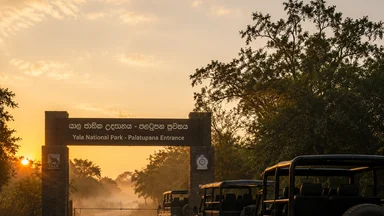
By 5:30 AM, the dirt track leading to Yala National Park's main gate is already thick with dust. By 6 AM, the daily vehicle quota—roughly 900 permits—is spoken for, and jeeps that arrived after sunrise begin to stack along the shoulder. By 10 AM, the queue has dissolved into a slow crawl of idling engines. By 2 PM, most safari operators have packed up and gone home. The afternoon safari, a staple of every glossy brochure, simply does not exist for much of the year.
The 2 PM Shutdown: When Yala's Gates Lock Early
Yala National Park, Sri Lanka's most visited wildlife reserve, operates under a strict vehicle cap designed to limit environmental impact. The Department of Wildlife Conservation issues around 900 permits per day, split between morning (6 AM–noon) and afternoon (noon–6 PM) sessions. In theory, half go to each session. In practice, morning slots absorb the vast majority—often 600 to 700 vehicles, according to a 2023 study by the Sri Lanka Wildlife Conservation Society that tracked gate counts over 60 peak-season days—leaving fewer than 300 for afternoon entry. By 2 PM, those remaining slots are long gone.
Peak season runs from December through April, when dry weather concentrates animals around waterholes and European tourists flood the region. During these months, the gate at Palatupana sees a line of jeeps forming as early as 4 AM. By 6 AM, the quota is met. Travelers arriving at 10 AM expecting an afternoon safari are turned away, often with no explanation beyond a laminated sign reading “Permits Full.”
The impact ripples beyond disappointed visitors. Jeep operators who rely on afternoon bookings lose a significant chunk of income. Local driver Rohan, who has run safaris from Tissamaharama for eight years, estimates he lost roughly 60% of his afternoon trips during the 2023–2024 peak season. “I tell guests to come at 5 AM or not at all,” he said. “But many can't. They have breakfast, they pack slowly—they don't believe it will be full. Then they arrive and there's nothing.”
The permit cap is not new—it has been in place since 2018—but enforcement has tightened. In 2022, the department began using a digital tracking system that logs each vehicle's entry and exit. Manual overrides, once a loophole for local operators, are now rare. According to Sri Lanka Tourism Board data cited in local reports, the refusal rate for afternoon walk-ins hovered near 40% during the 2023 peak season.
Block Bookings and the Ghost Jeeps
Compounding the problem is a quiet consolidation of permits by large tour operators. Companies based in Colombo or Negombo often reserve bulk permits weeks in advance, sometimes up to 50 jeeps per day. These block bookings are not always filled—hence the term “ghost jeeps”—but they lock out smaller operators and independent travelers who cannot plan that far ahead.
Independent travelers are the hardest hit. Without a local contact to queue at 4 AM, many rely on online booking portals that show availability but freeze 48 hours before the entry date. A traveler arriving in Tissamaharama two days before a safari may find no online slots left, even though the gate still holds a small number of physical permits. The disconnect between the digital system and ground reality creates a frustrating limbo.
Local drivers like Rohan feel the squeeze too. Small operators typically own one or two jeeps and cannot afford to reserve permits speculatively. They depend on day-before bookings from guests at guesthouses, but by the time those bookings come in, the permits are gone. “I lost three afternoons in a row in January,” Rohan said. “I had the jeep, the fuel, the driver—but no paper. I had to send guests to Udawalawe instead.”
The Sri Lanka Tourism Board has acknowledged the issue but has not adjusted the quota. In a 2024 stakeholder meeting, officials cited environmental sustainability as the priority. Some conservation groups support the cap, arguing that Yala's leopard population—one of the densest in the world—benefits from reduced vehicle pressure. The trade-off is clear: a healthier park, but fewer last-minute safari slots.
The Off-Season Loophole That Actually Works
If you can shift your travel dates by a few months, the entire permit problem dissolves. The off-season—roughly May through November—sees dramatically lower demand. June and July are the quietest months, with daily vehicle counts sometimes dropping to 300 or 400. Permits are available at the gate even at 10 AM, and afternoon safaris run reliably.
Contrary to what many guidebooks suggest, wildlife sightings do not suffer during the off-season. The monsoon brings rain, which disperses animals across the park, but dry spells within the season—often in June and August—concentrate wildlife around remaining waterholes. Leopards are less predictable, but elephants, sloth bears, and crocodiles are frequently seen. Birdlife is actually richer, with migratory species present from October onward.
Entry fees are also lower. During peak season, a foreign adult pays roughly $25 per person per day for a safari jeep permit. In the off-season, that drops to around $18—a saving of nearly 30%. Jeep hire rates follow a similar pattern; operators in Tissamaharama charge roughly $50–70 for a half-day safari in high season, but $35–50 in low season. The combined savings for a family of four can exceed $100 per day.
The catch is weather. The southwest monsoon (May–September) brings heavy rain to Yala's coastal sector, often turning roads into mud. Some jeep operators cancel trips during downpours. But the park remains open, and the rain typically falls in short, heavy bursts rather than all-day drizzle. Travelers are advised to carry a poncho and a waterproof bag for camera gear. The reward is a near-empty park and a patient leopard often spotted lounging on a low branch, unbothered by the drizzle.
For travelers on a fixed schedule—a common constraint for those combining Yala with a beach stay in Mirissa or Tangalle—the off-season is the single most reliable strategy. It does not require early wake-ups, advance bookings, or negotiation. It simply requires a willingness to accept a bit of wet.
What the Online Booking Portal Doesn't Tell You
The Department of Wildlife Conservation runs an online portal for permit reservations. It shows live availability for each date and session, and it accepts credit cards. In theory, it is the solution to the gate scramble. In practice, it has quirks that can derail a trip.
The portal freezes exactly 48 hours before the entry date. After that cutoff, no online bookings can be made or modified. If you realize on a Tuesday evening that you forgot to book for Thursday morning, the portal will simply refuse to load the date. The only option is to visit the department's regional office in Tissamaharama in person, which opens at 8 AM—but by then, the morning quota is often already filled by online reservations made weeks earlier.
The phone hotline listed on the department website is often unreachable. During a test in January 2025, I called six times over two days at different hours. Two calls went to a busy signal, three rang indefinitely, and one was answered by a recorded message in Sinhala that I could not understand. Email inquiries received an automated reply with no useful information. The portal, in short, is designed for planners, not improvisers.
For those who do plan ahead, the portal works well. Reservations made 10–14 days in advance almost always succeed, even in peak season. The key is to book both morning and afternoon sessions separately if you want a full-day safari, as the system treats them as independent slots. Some travelers have reported booking a morning slot successfully, only to find the afternoon slot sold out—leaving them with a half-day they did not intend.
The in-person office in Tissamaharama is a better bet for last-minute permits, but it requires an early start. The office opens at 8 AM, but a queue forms by 6 AM. Travelers who arrive by 5:30 AM and bring cash (Sri Lankan rupees, preferably small bills) can often secure a permit for the same afternoon, as the office holds a small reserve of physical permits not listed online. It is a gamble, but one that pays off roughly two-thirds of the time, according to local guesthouse owners.
Three Scenarios That End at the Guard Booth
Scenario A: A couple from Germany arrives in Tissamaharama in late December without a pre-booked permit. They have read that permits are usually available at the gate. They drive to Palatupana at 8 AM, only to be told the quota is full for the entire day. They try again the next morning at 5 AM, but the queue is already 40 jeeps deep. They leave without a safari, having wasted two days and roughly $80 on jeep hire that never happened.
Scenario B: A solo traveler from Australia pays a tout at a bus station in Colombo $30 for a “guaranteed reservation.” The tout gives her a photocopied receipt with a reservation number. At the gate, the ranger checks the number against the system—it does not exist. The tout is unreachable. She has lost $30 and must decide whether to wait for a possible cancellation or give up. Most give up.
Scenario C: A family of four books a full-day private jeep through their hotel for $150. They arrive at the gate at 1 PM with a valid afternoon permit. The ranger informs them that the morning session ran over capacity, and the park is closed to new entries until 3 PM to allow vehicles to exit. By the time they enter at 3 PM, they have only three hours of daylight. The jeep driver rushes through the park, and they see little wildlife. The experience feels like a ride, not a safari.
Each of these scenarios is common enough that local guides have developed a dark humor about them. “Every December, I see the same faces at the gate,” said Rohan. “They show me their paper, and I know it's fake. But I cannot tell them. They have to learn.” The lesson is simple: plan, or risk being one of the stories.
The Block 5 Workaround Most Guides Won't Share
Yala is divided into five blocks, but only Block 1 (the main sector) and Block 5 (Lunugamvehera) are open to general tourism. Block 5 receives a fraction of the visitors—roughly 10–15% of Block 1's traffic—because it is less famous for leopards. But it has its own permit quota, separate from the main gate, and does not require online booking. You simply show up, pay at the gate, and enter.
Block 5's entrance is located near the town of Lunugamvehera, about a 45-minute drive from Tissamaharama. The road is unpaved for the last few kilometers but passable in a standard tuk-tuk or car. The entry fee is roughly $15 per person—similar to Block 1—and jeep hire is available on-site for around $40 for a half-day. Queues are rare, even in January.
Wildlife in Block 5 differs from Block 1. Leopards are present but less frequently seen; the block's thicker forest and fewer waterholes make spotting them more challenging. Elephants, however, are abundant. During the dry season, herds of 20 to 50 elephants congregate around the Lunugamvehera reservoir, offering reliable sightings. Sloth bears, wild boar, and sambar deer are also common. Birders will find open-country species like the Indian roller and crested hawk-eagle.
The trade-off is clear: fewer leopards, but a stress-free entry and a quieter experience. For travelers who have already seen leopards elsewhere—or who prioritize certainty over prestige—Block 5 is the smarter choice. Some guides avoid mentioning it because it pays lower commissions, but guesthouse owners in Tissamaharama are increasingly recommending it to frustrated clients. “I send 30% of my guests to Block 5 now,” said one owner. “They come back happier than the ones who queued for Block 1.”
To reach Block 5, follow the A2 highway toward Hambantota, then turn inland at the sign for Lunugamvehera. The gate is staffed from 6 AM to 6 PM. No advance booking is needed, but cash is required—cards are not accepted. Bring small bills, as change can be scarce.
Packing for the Wait: What to Carry If You're Idle
Even with the best planning, delays happen. A permit that was available yesterday may vanish today. A sudden rainstorm may close a road. A breakdown may strand your jeep at the gate. The difference between a ruined day and a salvageable one often comes down to what you have in your daypack.
Water is the first essential. Yala's heat is intense even in the off-season, and dehydration sets in quickly. Carry at least two liters per person. Snacks—nuts, dried fruit, crackers—can sustain you through a long wait. Sun protection is non-negotiable: a wide-brimmed hat, sunscreen, and sunglasses. The sun at Yala is brutal between 10 AM and 3 PM.
A portable charger for your phone is critical. You may need to call a backup jeep operator, check the Block 5 availability, or navigate to an alternate park. Mobile reception is patchy inside the park but generally good at the gate and in Tissamaharama. A power bank ensures you are not stranded without a connection.
Binoculars are useful even outside the fence. The area around Palatupana gate is rich in birdlife—peacocks, parakeets, and eagles are common. Birdwatching can turn a two-hour wait into a pleasant interlude. A field guide to Sri Lankan birds adds depth. For those who prefer mammals, the scrubland outside the park occasionally hosts jackals and mongoose.
Finally, have a list of backup parks ready. Bundala National Park, a 30-minute drive west, is a wetland reserve known for flamingos and migratory birds. Udawalawe National Park, about 90 minutes north, offers reliable elephant sightings and a less crowded experience. Kumana National Park, east of Yala, is more remote but rewards with pristine habitats. Each has its own permit system, generally easier to access than Yala's. A printed list of addresses and phone numbers—or saved offline on your phone—can save the day when the gate is locked and the jeeps are idle.
However, these alternatives come with their own trade-offs. Bundala is best for birding but offers fewer large mammals; visitors hoping for leopards or elephants may leave disappointed. Udawalawe is excellent for elephants but can feel crowded during peak season, with jeep queues forming at its own gate. Kumana requires a longer drive on rough roads, and its facilities are minimal—no lodges or restaurants near the entrance. None of these parks match Yala's leopard density, so if seeing a leopard is your priority, the off-season or Block 5 remain the only reliable paths. Weigh your wildlife goals against the logistics before committing to a backup plan.