The Deferred Sales Trust Defers Nothing When You Spend the Proceeds
A deferred sales trust (DST) sounds like a dream for a business owner selling a $5 million company. You transfer an appreciated asset—real estate, a business, or securities—into a trust. The trust sells the asset, pays no capital gains tax at the time of sale, and then sends you installment payments over years. You defer the tax, keep some control, and the promoter collects a fee. What could go wrong? Nearly everything, if you ever spend the proceeds before the installment term ends.
The core promise of a DST is that you can access the economic benefit of the sale proceeds without recognizing the gain all at once. But the Internal Revenue Code and long-standing Treasury regulations say otherwise. Under the constructive receipt doctrine, if you have the power to direct the trust's assets for your benefit—even if you don't exercise it—the IRS can treat those assets as income to you in the year the power arises. Spend a dime from the trust on a personal expense, and the entire deferred gain may accelerate into that tax year, along with penalties and interest.
The Deferred Sales Trust Pitch: Defer Tax, Keep Control
Promoters of DSTs typically present them as a superior alternative to a Section 1031 like-kind exchange. The pitch goes like this: instead of reinvesting sale proceeds into another property within 180 days (as a 1031 exchange requires), you can place the asset into a DST before the sale closes. The trust then sells the asset, and you receive installment payments over a period you choose—often 10 to 30 years. You pay tax only on each installment as you receive it, and the rest of the gain remains deferred.
The marketing emphasizes flexibility. You can use the trust to hold the proceeds, invest them in a diversified portfolio, and control the timing of your income. Promoters often claim that the DST is a grantor trust, meaning you retain certain powers, but that the trust structure insulates you from immediate taxation. They may point to private letter rulings or tax opinions that support the DST concept—though those rulings typically involve narrow facts and explicit limitations on the seller's access to trust assets.
A DST is structured as an installment sale under Section 453 of the Internal Revenue Code. The trust buys the asset from you in exchange for a promissory note, and the trust's subsequent sale to a third party is not attributed to you. Each payment you receive from the trust includes a portion of gain and a return of basis. So far, this tracks the tax treatment of any installment sale. The twist is that promoters claim you can also borrow against the trust's assets or direct the trust to make investments on your behalf without triggering gain. That is where the trouble begins.
The Trap: Spending Proceeds Triggers Immediate Tax
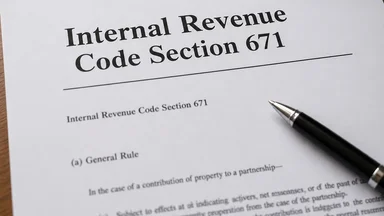
The Internal Revenue Code Section 453 governs installment sales generally. Under Section 453(a), a seller who receives payments over more than one tax year may report gain proportionally as payments are received. But Section 453(d) allows the IRS to disregard the installment method if the sale is structured to avoid tax. More importantly, the constructive receipt doctrine, codified in Treasury Regulation Section 1.451-2, provides that income is constructively received when it is credited to the taxpayer's account, set apart, or otherwise made available so that the taxpayer may draw upon it at any time.
If the DST holds assets that you can access—by directing the trustee to pay your personal expenses, by using the trust as collateral for a loan, or by exercising any power that effectively gives you control over the trust corpus—the IRS will likely argue that you have constructively received the entire gain in the year that power was created. Revenue Ruling 77-294 is instructive: the IRS held that a taxpayer who transferred property to a trust and retained the right to borrow trust funds without adequate security was in constructive receipt of the trust's income. The ruling applied even though the taxpayer never actually borrowed.
The trap is subtle. A DST document may give the trustee discretion to make distributions to you. If the trustee is someone you control—a family member, a business partner, or an entity you own—the IRS may treat that discretion as your power. Similarly, if the trust agreement allows you to substitute assets, to direct investments, or to terminate the trust early, the IRS can collapse the structure and tax the entire gain in the year of the sale. The result is that a DST that works perfectly as a deferral vehicle for someone who never touches the principal becomes a time bomb for anyone who needs liquidity.
Constructive Receipt: The Silent Tax Trigger
Treasury Regulation Section 1.451-2(a) defines constructive receipt broadly: "Income although not actually reduced to a taxpayer's possession is constructively received by him in the taxable year during which it is credited to his account, set apart for him, or otherwise made available so that he may draw upon it at any time." The regulation includes an important exception—if the taxpayer's control of receipt is subject to substantial limitations or restrictions, income is not constructively received until those limitations lapse.
The key question in any DST arrangement is whether the seller's access to trust proceeds is subject to a substantial limitation. Promoters often argue that the trustee's fiduciary duty to other beneficiaries (if any) or the trust's spendthrift clause creates such a limitation. But if the seller is the sole beneficiary, or if the trustee is the seller's agent, those limitations may be illusory. The IRS has consistently looked to the substance of the arrangement, not the form.
Consider a typical DST marketing example: you sell a rental cabin for $2 million and place it in a DST. The trust sells the cabin and holds the proceeds in a brokerage account. You have no immediate access, but the trust agreement allows you to direct the trustee to invest in publicly traded securities. You direct the trustee to buy shares of a company you own. The IRS could argue that you have effectively received the proceeds because you control the trust's investment decisions for your personal benefit. If you later ask the trustee to wire funds to pay for your daughter's wedding, the entire gain may accelerate.
The silent trigger is that you do not need to actually spend the money. The power to spend—the unfettered right to direct the trust's assets—is enough. In Rev. Rul. 60-31, the IRS held that a taxpayer who had the right to receive a deferred compensation payment at any time was in constructive receipt even though he never demanded payment. The same logic applies to DSTs: if the trust instrument gives you the right to call for distributions, you have constructive receipt of the entire trust corpus as of the date the trust was funded.
Promoter Incentives: Fees Before Tax Outcomes
DST promoters typically earn fees that are independent of the tax result. Setup fees often range from 2% to 5% of the asset's value, and annual trustee and administration fees run from 0.5% to 1% of trust assets. These fees are paid from the trust corpus or from the installment payments, meaning the promoter gets paid regardless of whether the IRS later recharacterizes the transaction. There is no clawback if the trust fails to defer tax.
Compare this to a Section 1031 exchange. In a 1031 exchange, a qualified intermediary holds the sale proceeds and the taxpayer cannot access them—at all—until the exchange is completed or fails. The intermediary's fee is typically a flat fee or a small percentage, and the taxpayer's ability to defer gain depends entirely on reinvesting in like-kind property within strict time limits. The 1031 exchange is codified in Section 1031, with decades of regulations and case law providing clear guidance. A DST, by contrast, relies on tax opinions that may not survive IRS scrutiny.
Some promoters also sell DSTs as a way to avoid the 1031 exchange's reinvestment requirement. But that flexibility comes at a cost: the DST's legal foundation is shakier, and the consequences of a mistake are severe. The promoter has no skin in the game—if the IRS audits the trust and assesses tax, penalties, and interest, the promoter keeps the fees. The taxpayer bears the full cost.
Illustrative Example: The Smith Family Vacation Home
To illustrate the risk, consider a composite case based on common fact patterns from IRS guidance. The Smith family owned a rental cabin in Colorado that had appreciated from $400,000 to $2 million. They wanted to sell and use some of the proceeds to fund their daughter's wedding and pay off their primary residence mortgage. A DST promoter told them they could defer the capital gains tax by selling the cabin to a DST, receive installment payments over 20 years, and still access the money when needed.
The Smiths transferred the cabin to a DST of which they were the sole beneficiaries. The trust sold the cabin to a third party and held the $2 million in proceeds. The Smiths then directed the trustee to wire $50,000 to the wedding venue and $300,000 to their mortgage lender. The following year, they directed another $100,000 to a car purchase. The Smiths reported only the installment payments they received—roughly $100,000 per year—on their tax returns.
The IRS audited the Smiths and invoked the constructive receipt doctrine. The IRS argued that by directing the trust to pay personal expenses, the Smiths had exercised dominion and control over the trust assets, making the entire $2 million gain constructively received in the year of the sale. The tax court agreed, citing Treasury Regulation Section 1.451-2 and Revenue Ruling 77-294. The Smiths owed capital gains tax on the full $2 million gain (roughly $440,000 at the 20% rate, plus the 3.8% net investment income tax) and penalties for underpayment. Interest pushed the total liability near $600,000.
This example is not hypothetical. The IRS has issued multiple guidance documents warning taxpayers about DSTs. In Chief Counsel Advice 2016-001, the IRS stated that a DST that gives the seller the right to direct investments or receive distributions will be treated as a grantor trust, meaning the seller is deemed to own the trust assets and must recognize gain when the trust sells the asset. The advice concluded that such arrangements do not achieve deferral.
Safer Alternatives: 1031 Exchange or Pay Now
For taxpayers who want to defer capital gains tax on the sale of real estate, a Section 1031 like-kind exchange is the most reliable path. The requirements are strict: the property must be held for business or investment, the replacement property must be of like kind, and the taxpayer must identify the replacement within 45 days and close within 180 days. But the law is well-settled, and a qualified intermediary can handle the mechanics. The taxpayer cannot touch the proceeds during the exchange period, but that is precisely what protects the deferral.
For taxpayers selling a business or other non-real-estate assets, a direct installment sale under Section 453 is a simpler alternative. You sell the asset directly to the buyer and accept a promissory note that pays you over time. You report gain only as you receive payments. No trust wrapper is needed. The risk of constructive receipt is lower because you are dealing directly with the buyer, not a trust you control.
Another option is to pay the tax now and invest the after-tax proceeds freely. If the tax rate on long-term capital gains is 20% (plus the 3.8% net investment income tax for high earners), paying $238,000 on a $1 million gain leaves $762,000 to invest. If you can earn a 7% annual return, you will have over $1.5 million in 10 years, compared to deferring and paying tax later on a larger gain. The math depends on your time horizon and tax rates, but paying now eliminates the risk of an IRS challenge and gives you complete freedom to spend the money.
Balanced Perspective: When a DST Might Work
While the risks are substantial, a DST can theoretically achieve tax deferral for a seller who never accesses the trust proceeds and never exercises any control over the trust's assets. For example, a retiree who sells a business and places the proceeds in a DST with an independent corporate trustee, receives only scheduled installment payments, and never directs investments or distributions may succeed in deferring gain. The trust must be irrevocable, the trustee must have sole discretion, and the seller must have no power to borrow, substitute assets, or terminate the trust early. In such a case, the substantial limitations on the seller's access may prevent constructive receipt. However, this narrow scenario requires extraordinary discipline and a complete surrender of control—a trade-off that most sellers find unacceptable. Moreover, even a well-structured DST faces IRS scrutiny, and any deviation from the strict terms can trigger immediate taxation. Therefore, while the theoretical possibility exists, the practical risks are high, and most sellers are better served by a 1031 exchange or a direct installment sale.
Before signing a DST agreement, ask the promoter for a written tax opinion that specifically addresses constructive receipt under Treasury Regulation Section 1.451-2 and Revenue Ruling 77-294. If the promoter refuses or provides a generic opinion, walk away. Better yet, consult a tax attorney who does not sell financial products. The attorney can review the trust document and advise on whether the specific terms create a risk of immediate taxation.
For more on how financial products can mislead, read about variable annuity fee stacks or hidden ETF trading costs. And if you are considering a DST, also review the grantor trust rules that can tax assets you never touched.
Disclaimer: This article is for informational purposes only and does not constitute legal or tax advice. Consult a qualified tax professional before entering into any deferred sales trust or other tax-deferral arrangement.