The Trust Fund Grantor Rule That Taxes Assets You Never Touched
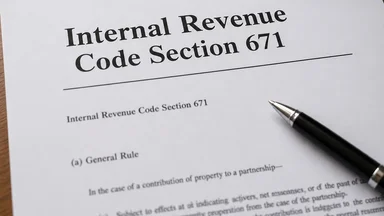
Imagine setting up a trust for your children, funding it with income-producing assets, and never taking a penny out. You assume the trust pays its own taxes. Then your CPA calls: the IRS expects you to report that income on your personal return. This is the reality of the grantor trust rules, codified in Internal Revenue Code Section 671. The provision treats the grantor as the owner of trust assets for tax purposes when certain powers are retained — even if the grantor receives no economic benefit. This article unpacks the statute, explains why the misconception persists, and shows how the rules can be used to your advantage.
The Myth: You Must Receive Trust Income to Be Taxed on It
A common piece of estate planning folklore holds that a trust is a separate taxpayer, and only beneficiaries who receive distributions owe tax on trust income. Many advisors repeat this as a rule of thumb. But the Internal Revenue Code draws a sharp distinction between trusts that are taxed as separate entities and those classified as grantor trusts. Under Subpart E of the Code (Sections 671 through 679), a grantor who retains certain powers over the trust is treated as the owner of the trust assets. The trust becomes a disregarded entity for tax purposes, and all income, deductions, and credits are attributed directly to the grantor — regardless of whether any income is distributed.
The myth likely stems from a confusion between simple and complex trusts on one hand and grantor trusts on the other. Simple trusts are required to distribute all income currently, and beneficiaries are taxed on that income. Complex trusts may accumulate income, and the trust itself pays tax on undistributed amounts. But neither rule applies if the trust is a grantor trust. The grantor trust rules override the normal trust taxation framework. The grantor is taxed on income even if it is accumulated or distributed to others.
This misconception is not harmless. Grantors who ignore the rules can face unexpected tax bills, penalties, and interest. The IRS has no sympathy for a grantor who “didn't know” they retained a power that triggered grantor status. The statute is clear: if you have the power to revoke the trust, control beneficial enjoyment, or reacquire trust assets, you are the owner for tax purposes.
Internal Revenue Code Section 671: The Grantor Trust Provisions
Section 671 is the cornerstone of the grantor trust rules. It provides that if a grantor or another person is treated as the owner of any portion of a trust under Sections 673 through 679, that owner shall be subject to tax on the income attributable to that portion. The trust itself is ignored for income tax purposes. The grantor reports trust items directly on their individual return, typically on Schedule E (Supplemental Income and Loss).
The statute was enacted in 1954 and has been amended sparingly. Its purpose is to prevent taxpayers from shifting income to a trust while retaining substantial control over the trust property. Without these rules, a high-bracket grantor could transfer assets to a trust, retain the power to revoke or control distributions, and have the trust pay tax at lower rates — or defer tax entirely by accumulating income. Section 671 closes that loophole by treating the grantor as the owner.
Importantly, Section 671 does not require the grantor to receive any income. The attribution is based on the retention of powers, not on economic benefit. As the Tax Court has repeatedly held, the grantor trust rules are a “conduit” theory: the trust is a conduit through which income flows to the grantor. Whether the income is distributed or reinvested is irrelevant. The grantor pays the tax.
The Retention of Powers That Triggers Grantor Status
Several specific powers cause the grantor to be treated as owner. Section 673 deals with reversionary interests: if the grantor retains a reversionary interest in the trust corpus or income that exceeds 5% of the value of the trust, the grantor is treated as owner. Section 674 addresses powers to control beneficial enjoyment. If the grantor (or a non-adverse party) can affect who receives trust income or principal, grantor status is triggered — with exceptions for independent trustees and limited powers.
Section 675 covers administrative powers. If the grantor can borrow trust funds without adequate interest or security, or if the grantor can vote stock held by the trust in a way that benefits the grantor, the grantor is treated as owner. Section 676 is the most straightforward: a power to revoke the trust, whether exercisable alone or with a non-adverse party, makes the grantor the owner of the entire trust. Finally, Section 677 provides that if trust income may be distributed to the grantor or applied for the grantor's benefit (e.g., to pay life insurance premiums on the grantor's life), the grantor is treated as owner of that income portion.
These rules operate automatically. You do not file a form to elect grantor status; it is a function of the trust instrument. Many irrevocable trusts are designed to be grantor trusts intentionally, while others become grantor trusts inadvertently. A common example is a revocable living trust: because the grantor retains the power to revoke, it is always a grantor trust. The grantor reports all income on their personal return, even if the trust holds assets and generates income that the grantor never touches.
Why the Misconception Persists Among Advisors
The misconception that you must receive trust income to be taxed on it persists for several reasons. First, many advisors are more familiar with the rules for non-grantor trusts — simple and complex trusts — where beneficiary taxation depends on distribution. The grantor trust rules are a separate overlay that many practitioners do not master. Second, the distinction between economic benefit and tax ownership is subtle. In everyday language, “ownership” implies control and benefit, but the tax definition is broader.
Third, some older IRS rulings and publications have been overgeneralized. For example, a 1970s ruling about a specific trust arrangement may have stated that income was not taxable to the grantor because no power was retained, but practitioners misapplied it to all trusts. Fourth, continuing education courses often gloss over grantor trust rules, focusing instead on the more common estate tax provisions. The result is a gap in knowledge that leads to costly errors.
Finally, the rise of online legal document services has made it easy to create trusts without understanding the tax implications. A grantor may sign a trust instrument that contains a clause reserving the power to substitute assets of equivalent value — a power that triggers grantor status under Section 675(4). The grantor never realizes that this innocuous clause makes them taxable on all trust income.
Real Consequences: Unwarranted Tax Surprises
The consequences of ignoring the grantor trust rules can be severe. Consider a grantor who creates a revocable living trust but continues to file taxes as if the trust is a separate entity. The trust's accountant prepares a Form 1041 showing zero tax due because all income was distributed to the grantor (or, worse, accumulated). The grantor's individual return omits the trust income. The IRS matching system catches the discrepancy: the trust reported income on a K-1 but the grantor did not include it. An audit follows, and the grantor owes tax, interest, and possibly accuracy-related penalties.
Another common scenario involves an irrevocable life insurance trust (ILIT). If the ILIT is structured as a grantor trust — which is common to allow premium payments without gift tax — the grantor must report the trust's income and deductions. Even though the trust owns a life insurance policy and the grantor receives no benefit, the grantor pays tax on any dividends or interest earned by the trust. Many grantors are shocked to learn this.
Estate tax inclusion is another risk. Under Sections 2036, 2037, and 2038, if the grantor retains certain powers over the trust, the trust assets are included in the grantor's gross estate for estate tax purposes. This can defeat the purpose of an estate planning trust designed to remove assets from the estate. The grantor trust rules for income tax and the estate tax inclusion rules are separate but often align. A trust that is a grantor trust for income tax purposes may also be includible in the estate.
Correcting the Record: Practical Steps for Grantors
Grantors who discover they have a grantor trust should take immediate steps. First, confirm the trust's status by reviewing the trust instrument with a qualified tax professional. Look for clauses that grant the power to revoke, amend, or control distributions; reversionary interests; or administrative powers like borrowing or substituting assets. Second, if the trust is grantor, ensure that tax reporting is correct. The trust should file a Form 1041 with a grantor trust attachment (a statement indicating that all items are reported on the grantor's return), and the grantor should report the trust's income on Schedule E of Form 1040.
Third, maintain separate accounting for trust income and expenses. Even though the grantor reports the items, the trust's books must be kept for fiduciary accounting purposes. Fourth, consider whether the grantor status is intentional or accidental. If it was unintended, the trust may be amended (if permissible) or the grantor can take actions to terminate grantor status by relinquishing the triggering power. However, this may have gift tax consequences. For example, if a grantor releases a power to revoke, that release may be a gift to the trust beneficiaries.
Fifth, consult the exact statutory language rather than summaries. The Treasury Regulations under Section 671 provide detailed examples. Reading the statute and regulations directly can prevent reliance on oversimplified advice. Finally, use qualified tax counsel for trust drafting. A well-drafted trust can either avoid grantor status or embrace it intentionally, depending on the client's goals.
The Revisionist Take: Grantor Trust Rules Are an Asset, Not a Trap
While the grantor trust rules can create unwelcome tax surprises, they are also a powerful planning tool. Intentionally defective grantor trusts (IDGTs) are designed to be grantor trusts for income tax purposes but not for estate tax purposes. Because the grantor pays the trust's income tax, the trust assets grow free of income tax, effectively allowing the grantor to make additional gifts to the trust without using gift tax exemption. This is a form of “tax burn” — the grantor's payment of the trust's tax liability is not treated as a gift to the beneficiaries.
Another technique is the sale to an IDGT. A grantor sells assets to a grantor trust in exchange for a promissory note. Because the trust is a grantor trust, the sale is not recognized for income tax purposes. The grantor receives the note payments, but the trust's future appreciation accrues to the beneficiaries. The grantor continues to pay tax on trust income, further leveraging the estate freeze.
Grantor trusts also allow for income shifting in a controlled manner. For example, a grantor can create a trust that pays for a child's education. The grantor retains the power to control distributions (triggering grantor status), pays the tax on the trust income, and the trust distributes funds for the child's tuition. The grantor effectively pays the child's expenses with after-tax dollars, but the trust's assets are removed from the grantor's estate.
The key is proper planning. Grantor trust rules are not a trap for the careless; they are a feature that can be harnessed. The misconception that you must receive trust income to be taxed on it is dangerous, but understanding the rules allows you to choose whether to be a grantor trust or not. The decision should be made based on your overall estate plan, not on ignorance.
In summary, the grantor trust rules under IRC Section 671 impose tax on trust income even if the grantor never receives a distribution. This article has explained the statutory basis, the powers that trigger grantor status, why the misconception persists, and the real consequences. It has also shown how the rules can be used strategically. The takeaway is clear: know your trust's status, report correctly, and plan intentionally. The grantor trust rules are neither myth nor trap — they are a tool for those who understand them.
This article is for informational purposes only and does not constitute legal, tax, or financial advice. Consult a qualified professional regarding your specific situation.